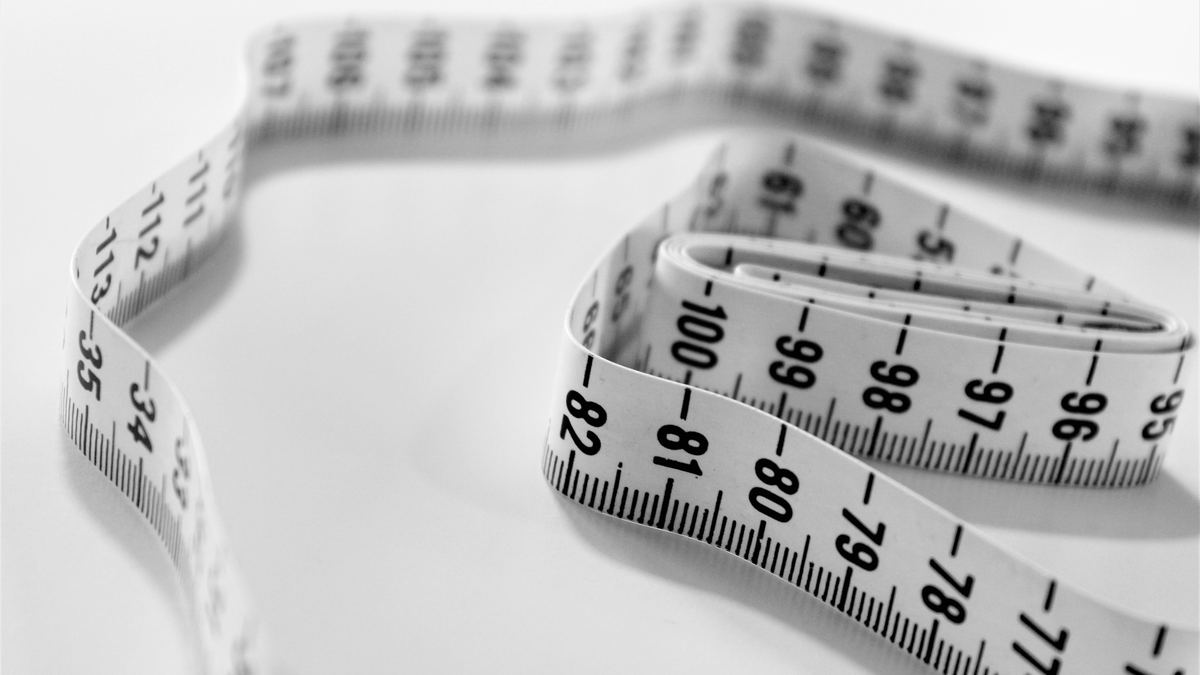

How the US Navy method works
The US Navy developed this method to estimate body fat quickly without special equipment. It uses the difference between your waist and neck measurements (plus hips for women) relative to your height. It's less precise than lab methods like a DEXA scan and can be off by a few percentage points, but because it's quick and repeatable it's a good way to track changes over time.
The formulas in centimeters are:
- Men: 495 ÷ (1.0324 − 0.19077 × log₁₀(waist − neck) + 0.15456 × log₁₀(height)) − 450
- Women: 495 ÷ (1.29579 − 0.35004 × log₁₀(waist + hips − neck) + 0.22100 × log₁₀(height)) − 450
Body fat categories
| Category | Men | Women |
|---|---|---|
| Essential fat | 2–5% | 10–13% |
| Athletes | 6–13% | 14–20% |
| Fitness | 14–17% | 21–24% |
| Average | 18–24% | 25–31% |
| Above average | 25%+ | 32%+ |
These categories are the ones published by the American Council on Exercise and are a common reference in gyms.
Frequently asked questions
How accurate is the US Navy method?
It's an estimate. Compared with lab methods it can be off by a few percentage points, more so for very lean or very muscular people. It's best used to track your own changes over time with the same tape and technique.
Is a smart scale more accurate?
Not necessarily. Home bioimpedance scales are affected by hydration and can swing several points from day to day. A tape measure used consistently is often just as useful for tracking trends.
What body fat do you need to see abs?
It varies with genetics, but abs usually start to show at around 10–12% for men and 18–20% for women.
Getting consistent measurements
- Measure first thing in the morning, before eating or training.
- Take each measurement twice and use the average.
- Compare results over weeks, not days. Water and food can shift your waist measurement from one day to the next.
Lean mass from this calculator pairs well with the protein calculator if you're setting nutrition targets.